Chaises de bureau : guide complet pour choisir et acheter votre siège professionnel

Ergonomic armchairs, executive chairs, meeting chairs, bar stools, lounge seating – a full range of professional seating solutions to furnish your workspace.

Furnishing your company’s offices involves more than just choosing a chair. Depending on the environment – whether it’s an individual workstation, an open-plan office, a meeting room, a canteen or a reception area – the requirements in terms of comfort, ergonomics and aesthetics vary considerably.

This guide helps you identify the right selection criteria and find the right office chair for every purpose. You can view our full range at our showroom in Nivelles, where you can try out each model before you buy.
Versatility

Professional seating for all environments: private offices, open-plan offices, meeting rooms, cafeterias, reception areas and relaxation areas.

Tips and explanations

Ergonomic criteria, mechanisms and materials explained for each product range.

Customisation

Customisation options available: colours, upholstery, armrests and mechanisms to reflect your corporate identity.

Showroom: 1,500 m²

Models available to try out at the showroom in Nivelles before making a purchase decision.

What is a professional office chair?

Professional office chairs are not distinguished from ordinary chairs solely by their appearance. The fundamental difference lies in their functionality: they are designed for intensive use at the workstation, often for 6 to 8 hours a day, in a context where postural comfort has a direct impact on employees’ productivity and health.

A classic chair, dining chair, visitor’s chair or lounge chair is designed for short periods of use. It does not incorporate the adjustment mechanisms required for prolonged use: adjustable seat height, adjustable lumbar support, seat depth, backrest tilt and adjustable armrests. It is precisely these adjustment features that distinguish professional office chairs from ordinary chairs.

In terms of ergonomic criteria, an office chair worthy of the name must allow the user to maintain a neutral posture: feet flat on the floor, knees at a 90° angle, lower back supported, and shoulders relaxed. The available mechanisms – constant contact, synchronous and tilt – determine the extent to which the chair dynamically adapts to the body’s movements throughout the day.

The European standard EN 1335 sets out the minimum requirements regarding dimensions, strength and safety for office chairs intended for professional use. It classifies chairs into three categories according to the intensity of use for which they are intended. When purchasing equipment for a business, checking compliance with EN 1335 is an objective purchasing criterion that guarantees the product’s durability and ensures the employer fulfils their responsibility regarding working conditions.

In terms of lifespan, a professional office chair is designed to withstand intensive daily use for 8 to 10 years. It is an investment that should be assessed in terms of total cost, not just the unit purchase price.

How do you choose the right office chair?

There is no such thing as a one-size-fits-all office chair. The right choice depends on several factors that need to be considered together: who will be using the chair, for how long, in what environment, and on what budget. Here are the six key criteria.

Daily use and duration of use

The first criterion is the actual duration of use. A workstation used for 2 to 3 hours a day does not require the same level of investment as one used for 7 to 8 hours continuously. For intensive use, the requirements in terms of lumbar support, dynamic mechanisms and the quality of materials are significantly higher. Under-equipping a workstation intended for intensive use means accepting a rapid decline in comfort and an increased risk of musculoskeletal disorders amongst your staff.

The user’s physique

Height, build and leg length: your body type directly determines the adjustments required. A standard office chair generally offers a seat height range of 42 to 52 cm, which suits the majority of users of average height. For users with non-standard profiles – such as those who are very tall or of a heavier build – there are specific models available with extended adjustment ranges and increased weight capacities, often up to 150 kg. Overlooking this point when making a bulk purchase for a team is a common mistake.

The environment and the type of space

The working environment largely determines the type of seating required. An individual workstation in a closed-plan office calls for an ergonomic chair with an advanced mechanism. An open-plan office with shared workstations requires sturdy chairs that are quick to adjust and easy to maintain. A meeting room needs stackable or fixed-base chairs that are attractive and lightweight. A canteen or reception area calls for lounge seating, bar stools or pouffes, depending on the desired atmosphere. Each environment has its own specific requirements.

The budget and total cost analysis

The purchase price of a professional office chair ranges from 250 to over 1,500 euros, depending on the range and options. But thinking in terms of unit price is a miscalculation. An entry-level office chair costing 250 euros, used in a high-usage environment, will be out of service within 2 to 3 years. A mid-range office chair costing 500 euros, used in the same environment, will last 8 to 10 years. When calculated on an annual cost basis, the investment pays off in the opposite way. For bulk purchases, negotiating pricing terms on medium- to high-quality models is consistently more cost-effective than buying large quantities of low-end chairs.

Technical mechanisms and settings

This is the aspect most often misunderstood when making a purchase. There are three main mechanisms available on the market. The tilt mechanism is the most basic: it allows the backrest to be tilted independently of the seat. The synchronous mechanism links the movement of the backrest and seat in a defined ratio, providing more natural dynamic support. The constant-contact mechanism continuously adjusts the backrest’s resistance to the user’s weight; this is the recommended standard for workstations subject to heavy use. As well as the mechanism, check that the essential adjustments are available: seat height, seat depth, armrest height and width, backrest tension, and adjustable lumbar support.

Materials and coatings

The choice of upholstery affects comfort, maintenance and appearance alike. Breathable fabric is the most comfortable for prolonged use, as it regulates temperature better than leather or imitation leather. Leather and eco-leather are more typical of executive or reception areas; they are easy to clean but less breathable. Mesh is an attractive compromise: breathable, lightweight, stylish, and particularly well-suited to hot environments or users who work for several hours without a break. For high-traffic communal areas, opt for upholstery that is stain-resistant and abrasion-resistant.

Fitting out your business with office chairs: what SMEs need to know

For SMEs and growing businesses, purchasing office chairs is often a collective decision: there are several workstations to furnish, a variety of user profiles to cater for, and an overall budget to optimise. Wooh supports Belgian businesses throughout this process, from selecting the right models for each workstation right through to delivery and on-site assembly. Bulk orders are subject to a bespoke pricing offer. Contact our team for a quote tailored to your project.

The different types of office chairs

Every workplace has its own specific requirements. Below you will find the seven ranges of office chairs available from Wooh, along with the key features and recommended uses for each.

Ergonomic office chairs

Ergonomic office chairs

Ergonomic task chairs are the gold standard for workstations subject to heavy use. Designed to adapt to the user’s body shape and movements throughout the day, they feature a range of advanced adjustments, lumbar support, armrests and a synchronous or constant-contact mechanism, all of which help maintain a neutral posture during long working sessions. This is the top priority investment for any employee who spends more than 5 hours a day at their desk.

Executive chairs

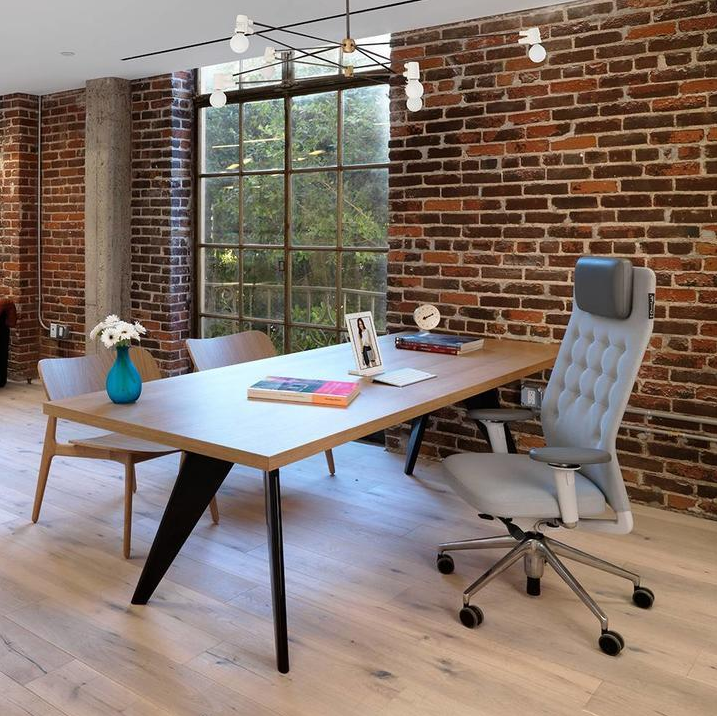
The executive chair meets two key requirements: premium comfort for long working sessions and an elegant design befitting a high-end executive or reception area. It stands out for its high-quality materials, generous dimensions, a high backrest with a headrest, and a meticulous finish that reflects the company’s image.

Executive office chairs
Meeting room chairs

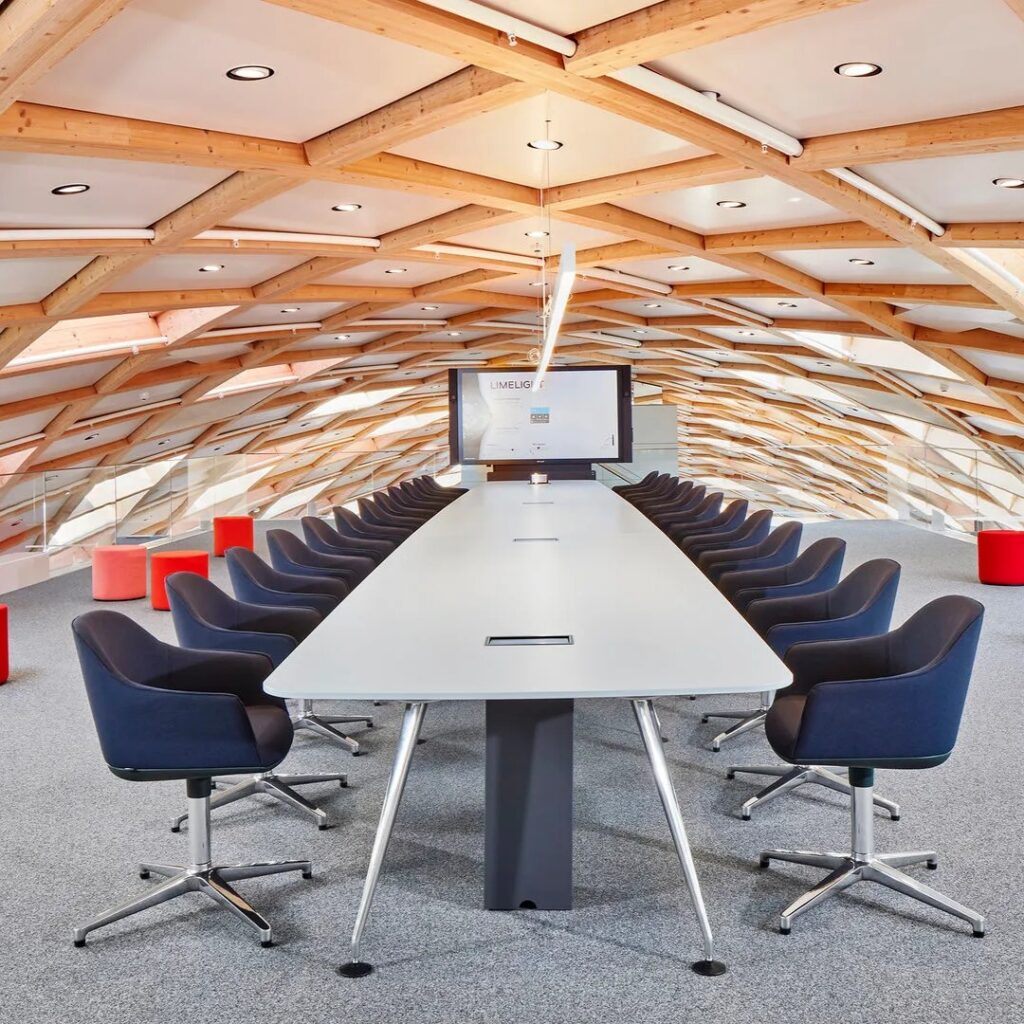
Meeting and conference chairs

A meeting chair is designed with a different approach to that of a standard office desk chair. Lightweight, stackable or easy to move, it must be comfortable enough for sessions lasting between 1 and 3 hours and blend in aesthetically with the space. It is available on castors for dynamic conference rooms or with fixed legs for permanent set-ups.

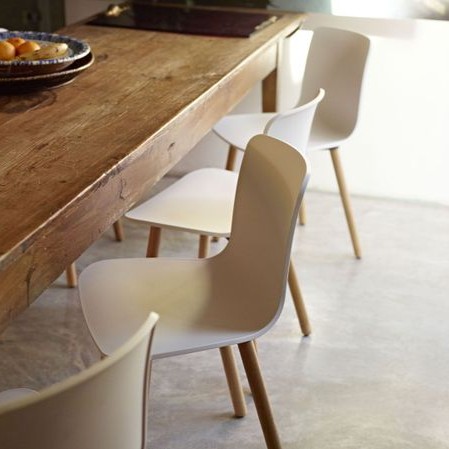
Contract chairs

Commercial chairs are designed for high-traffic, shared-use areas: company canteens, waiting rooms, training rooms and reception areas. Their structural robustness, ease of maintenance and availability in stackable versions make them the go-to solution for efficiently furnishing communal areas within a company.

Office chairs for public sector organisations
Stool-style office chairs

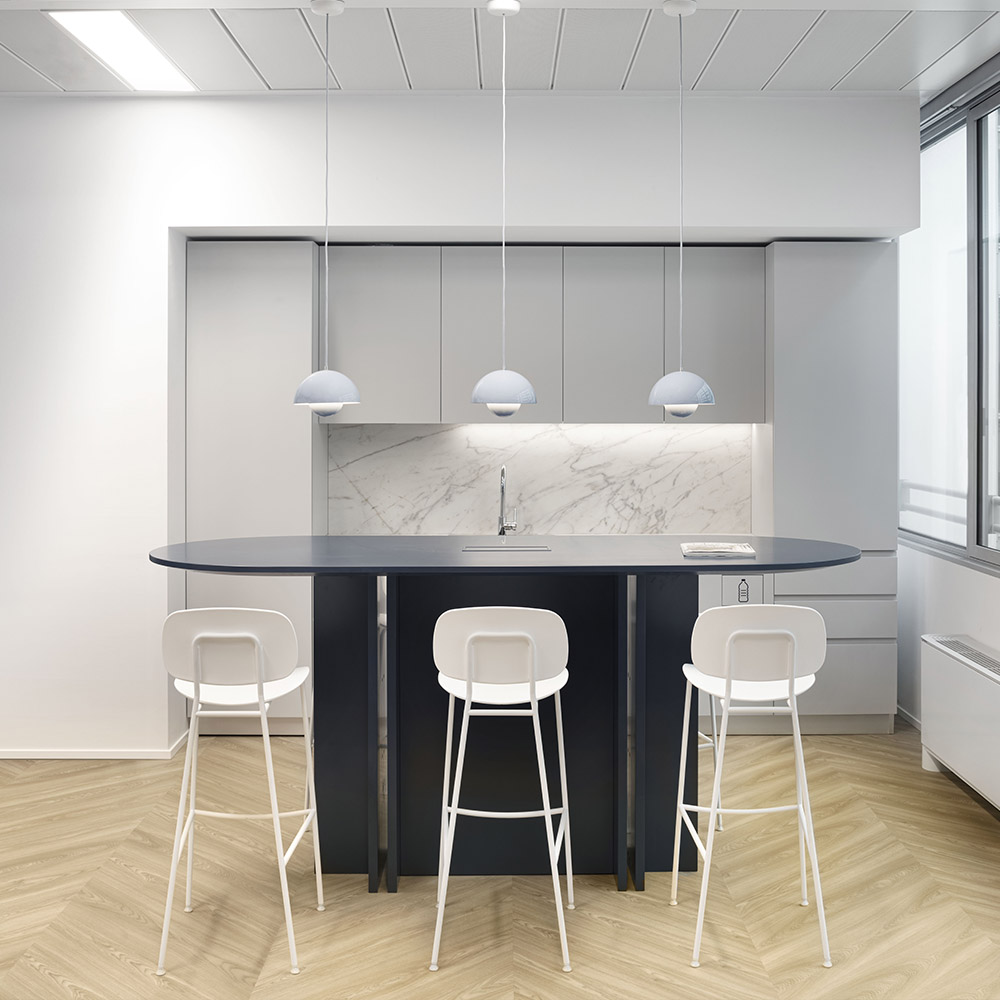
Stools and high chairs

High stools and high chairs are essential in sit-stand environments, cafeteria areas with high-backed furniture, reception areas with counters, and workshops. They allow users to alternate between different working positions throughout the day, which significantly reduces postural fatigue during long working days.

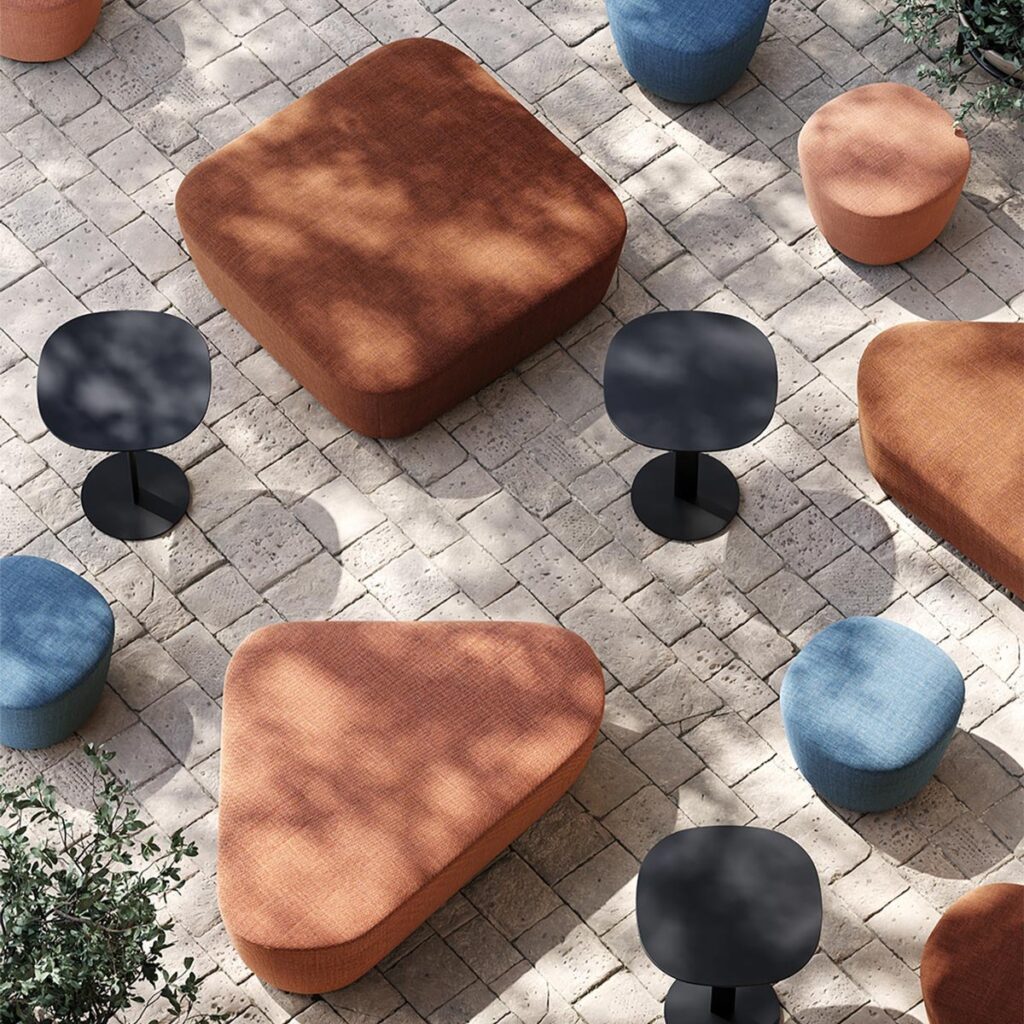
Ottomans and lounge chairs

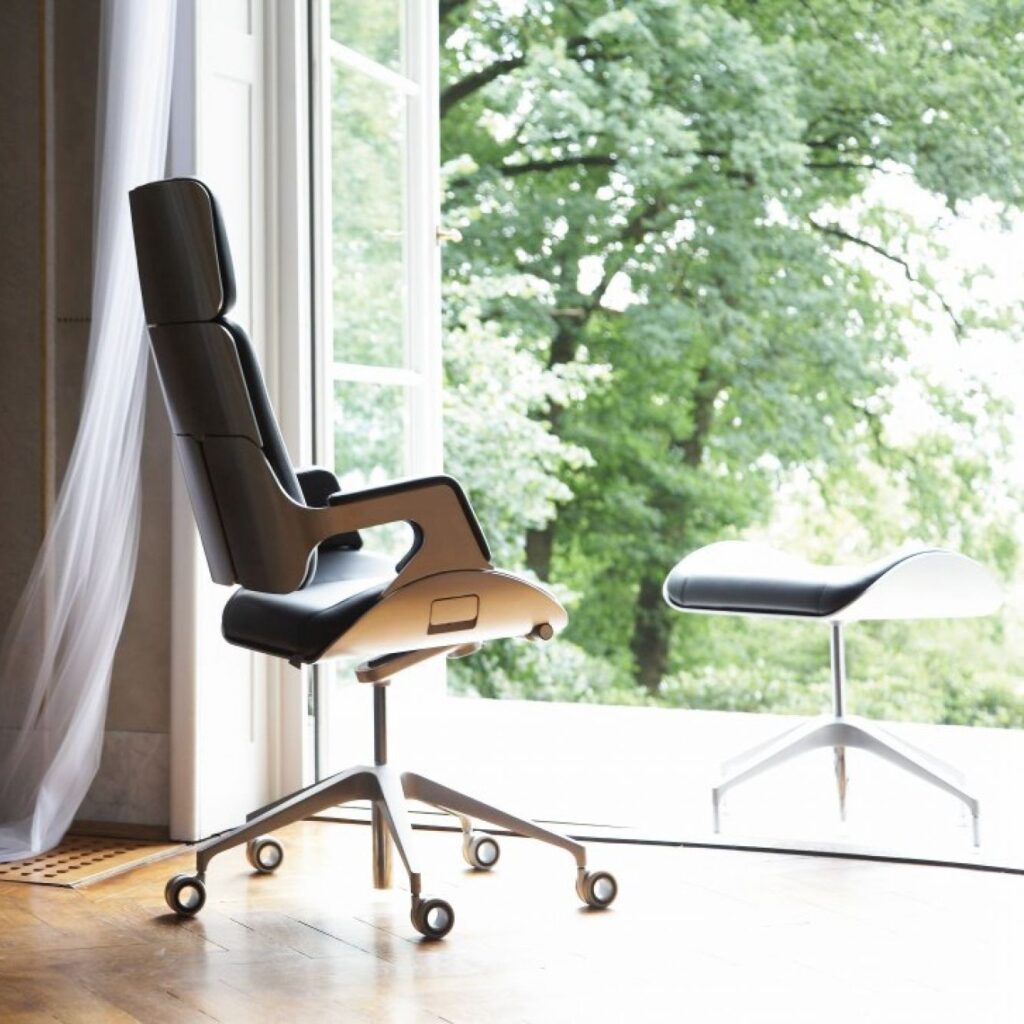
The pouffe and lounge chair serve a different purpose in office design: to create areas for breaks, relaxation or informal interaction within the company. Whether in lounge areas, break rooms or creativity rooms, these seating options contribute to the quality of life at work and the company’s image, as well as to its functionality.

Beanbag-style office chairs
Technical office chairs

Specialist technical seats

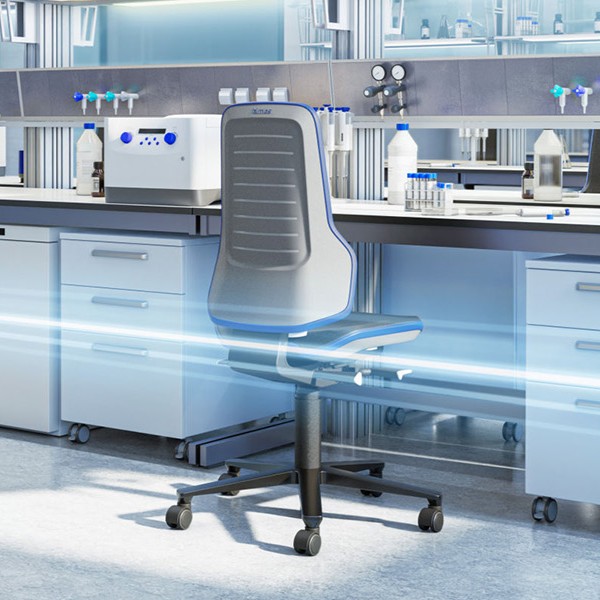
Technical chairs are designed for specific professional environments where hygiene, posture and mobility requirements are particularly high: laboratories, dental practices, doctors’ surgeries and precision workshops. These chairs meet strict standards and incorporate features not found in standard office chairs.

Office chairs for every workplace

A well-equipped workspace starts with seating that is suited to each area. Whether it’s a private office, an open-plan office, a meeting room or a lounge area, each environment has its own specific requirements in terms of comfort, mobility and aesthetics.

01

Private office and fixed workstation

The private office is the environment that warrants the highest level of investment in seating. The user sits in the same chair for several hours a day, often without a break. Ergonomic office chairs with advanced mechanisms, comprehensive adjustments and breathable upholstery are the go-to solution here. Customisation is possible as the chair is assigned to a single user.

02

Open-plan offices and shared workstations

Open-plan offices present specific challenges: chairs are often used by several staff members on a rotational basis, which requires quick and intuitive adjustments, superior structural strength and ease of maintenance. Visual consistency between workstations is also an important consideration in these high-visibility internal spaces.

03

Meeting and conference room

In a meeting room, office chairs must combine sufficient comfort for sessions lasting between 1 and 3 hours, lightness so that they can be easily moved or stacked, and a smart design that reflects the company’s professional image. Models with castors are suitable for flexible layouts, whilst those with fixed legs are ideal for permanent conference rooms.Dans une salle de réunion, Dans une salle de réunion, les chaises de bureau doivent concilier confort suffisant pour des sessions de 1 à 3 heures, légèreté pour être facilement déplacée ou empilée, et esthétique soignée qui reflète l’image professionnelle de l’entreprise. Les versions à roulettes conviennent aux configurations modulables, les versions sur pieds fixes aux salles de conférence permanentes.

04

Reception area

The reception area is the first impression the company makes on its visitors. Seating must therefore be aesthetically in keeping with the brand’s identity, comfortable for varying waiting times and robust enough to withstand heavy use by people from outside the company. Contract chairs, lounge chairs or visitor chairs, depending on the desired positioning.

05

Canteen and dining area

Company canteens face a number of significant challenges: heavy footfall, frequent cleaning, and furniture subject to knocks and damp. Stackable commercial chairs with stain-resistant upholstery are the standard solution. For areas with high-back furniture, central islands or counters, stools and high chairs naturally complement the layout.

06

Lounge area and relaxation area

Lounge areas address a growing need in the modern workplace: to provide spaces for relaxation, informal interaction and creativity. Beanbags, hanging chairs and modular seating – these solutions deliberately break away from the conventions of traditional office furniture to create a different atmosphere, conducive to relaxation and informal collaboration.

07

Technical environment and workshop

Laboratories, doctors’ surgeries, dental practices and precision workshops require specialised seating that cannot be replaced by standard office chairs. Requirements relating to hygiene, specific posture and mobility on technical floor coverings necessitate precise features: disinfectable upholstery, suitable bases and special adjustments. Choosing the wrong chair for these environments has a direct impact on the quality of work and the health of users.

Try out our office chairs in our showroom

Simply choosing office chairs from a photo isn’t enough. You can only really feel how comfortable a chair is, assess its adjustments whilst seated, and judge the quality of the materials by touch. That’s why our showroom in Nivelles allows you to try out our entire range of office chairs before making a purchase decision.

When you visit us, you can assess the mechanisms, compare the upholstery options, test the settings and seek advice from our experts to identify the solution best suited to your spaces and your staff. Whether you’re furnishing a single workstation or an entire office floor, a visit to our showroom helps you avoid making the wrong choices and speeds up the decision-making process.

Frequently Asked Questions about Office Chairs

How much should you budget for a professional office chair?

The budget required for professional office chairs varies depending on the range and intended use. For chairs intended for moderate use, expect to pay between 250 and 400 euros per chair. For chairs intended for intensive use, high-quality ergonomic office chairs cost between 400 and 900 euros. Top-of-the-range executive chairs regularly exceed 1,000 euros. Always consider the total cost over the chair’s lifespan. A high-quality office chair used for 8 years works out cheaper per year than an entry-level model replaced every 2 years.

Can poor-quality office chairs cause pain?

Yes, and this is well documented. A chair that is unsuitable for the user’s body type or the duration of use causes postural strain, leading to lower back, neck or shoulder pain. Musculoskeletal disorders are the leading cause of absenteeism in the workplace in Europe. Investing in a properly adjusted ergonomic chair is a practical preventative measure, not a luxury. For roles involving intensive use, an unsuitable chair also makes the employer liable for failing to provide suitable working conditions.

How do you choose the right office chair for your business?

The choice of office chairs depends on four main factors: the length of time the workstation is used each day, the users’ body types, the type of environment (individual office, open-plan office or meeting room) and the available budget. For a bulk purchase, it is recommended that you test several models in real-world conditions before placing an order. Our showroom in Nivelles is specifically designed for this pre-purchase evaluation stage.

Does Wooh offer delivery and assembly of office chairs?

Yes, Wooh offers delivery and assembly services for business orders. The terms and conditions vary depending on the size of the order and the location. Please contact our team to receive a quote tailored to your fit-out project. We mainly operate in Belgium and the neighbouring regions.

Is it possible to customise office chairs to match the company’s colours?

Yes, customisation is available for a large part of our catalogue. This includes upholstery options, choice of fabric, colour, leather or mesh, as well as certain structural elements such as legs and armrests. For bulk orders, specific customisation options can be negotiated directly with our suppliers. Please speak to our team in the showroom or via email to discuss the possibilities for your chosen model.

How long does a professional office chair last?

Mid- to high-quality office chairs are designed for intensive daily use over a period of 8 to 10 years. This lifespan depends on the quality of the materials, the intensity of use and regular maintenance. The parts most prone to wear and tear are the mechanism, the seat upholstery and the castors – components that can often be replaced individually to extend the chair’s lifespan without having to buy a whole new chair.

What is the EN 1335 standard for office chairs?

The European standard EN 1335 sets out the minimum requirements for safety, strength and dimensions for office chairs intended for professional use. It classifies chairs into categories according to the intensity of their intended use. When purchasing for a business, checking that a model complies with EN 1335 is an objective criterion that guarantees its durability and ensures the employer meets their obligations regarding working conditions. Reference to this standard must be included in the product’s technical specifications.

Can you try out office chairs before buying them at Wooh?

Yes, that is precisely the point of our showroom in Nivelles. Our entire range of office chairs is on display there and can be tried out in real-life conditions. We recommend this step for any bulk purchase; testing a model for a few minutes whilst seated is the only reliable way to assess its comfort, adjustability and suitability for your spaces. Visits are by appointment only to ensure you receive personalised assistance.

Shopping Cart
Scroll to Top