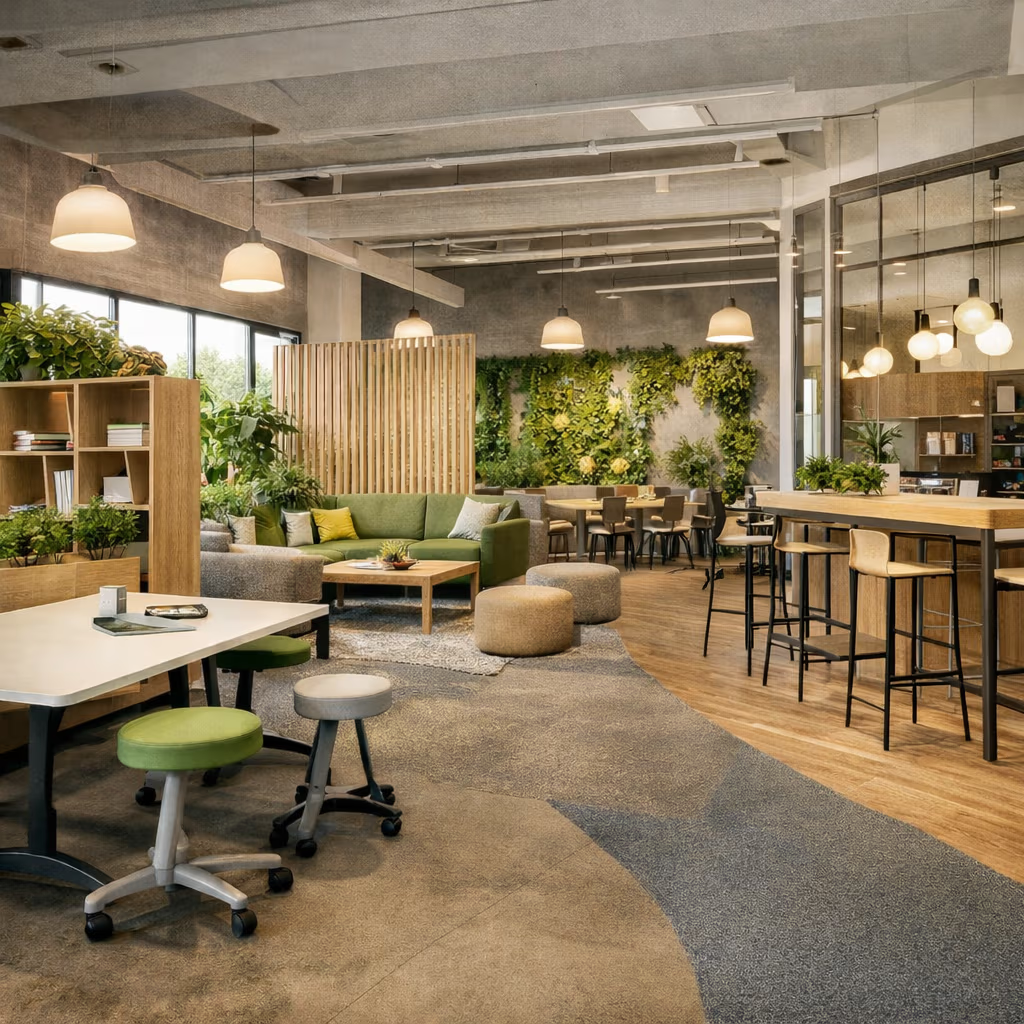
In just a few years, the office has changed its role. With hybrid working, the war for talent and the rise of well-being issues, the workplace has become a strategic tool: it must make people want to come in, facilitate collaboration and reflect the company’s image.
In Europe, the hybrid model is now the norm: it accounts for around 44% of all “teleworkable” jobs in the EU. And nearly 75% of organisations have already implemented a hybrid working policy.
At Wooh Original Office Store, we assist SMEs, freelancers and large organisations with their office design on a daily basis. Here are the three major trends for 2026 that we see emerging and how we are responding to them in practical terms through our furniture and design solutions.
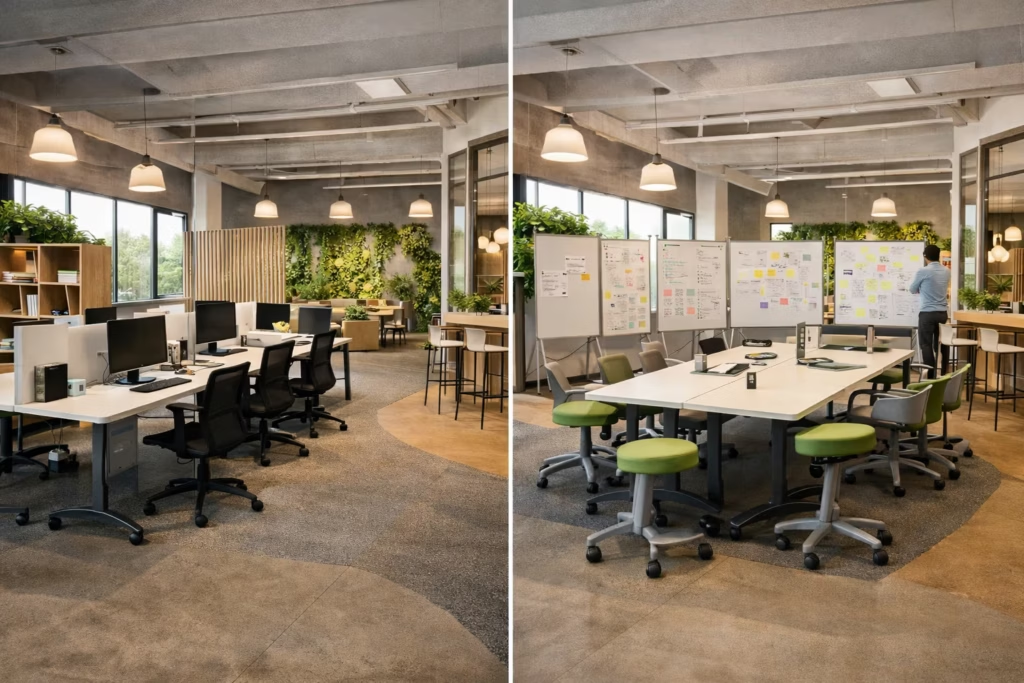
By 2026, your office must be able to change in a single day.
Project meetings, workshops, teleworking, customer events… The most efficient spaces are those that can be reconfigured without major work, thanks to modular and easily movable furniture.
“Checklist express”
Is your layout truly flexible?
- Are most workstations shared rather than assigned?
- Can you set up a project space in less than an hour without moving the entire floor?
- Are your meeting tables modular (extendable, on castors)?
- Do you have clearly identified areas: concentration, collaboration, informal, video?
How Wooh is embracing this trend
At Wooh, we work in tandem:
- Our team of interior designers creates modular layout plans (zones, flow, acoustics, lighting).
- Our showroom in Nivelles allows you to test different types of ergonomic seating, tables, storage units and partitions.
- Our finishing team manages space adaptations (painting, flooring, lighting, partitions) to ensure that the furniture and the building work together.
The objective: to enable your offices to change configuration in line with your growth and projects, without having to start from scratch each time.
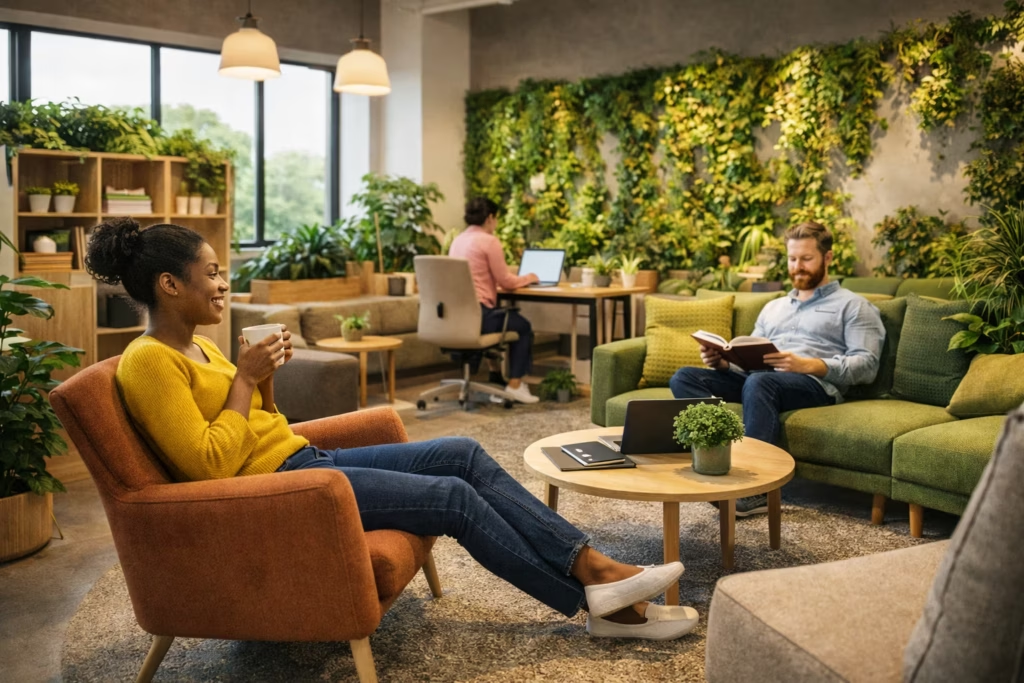
An office that feels good makes you want to come back.
Biophilia is not just about “putting two plants on a piece of furniture”. It is about designing spaces where light, materials, colours and plants create a soothing environment that is conducive to concentration and interaction.
The second major trend is the integration of nature into the office, also known as biophilic design. Research shows that adding elements inspired by nature (plants, natural light, outdoor views, natural materials) has a measurable impact:
- +6 to 8% productivity,
- up to 15% more creativity,
- and, according to some studies, up to a 37% reduction in stress and a 34% increase in creativity in spaces that strongly incorporate biophilia.
At the same time, mental health remains a major issue: a recent international survey highlights that 67% of managers have observed an increase in health, safety and well-being issues at work over the past year.
In practical terms, biophilia in the office means:
- Plants integrated into furniture (planters, green partitions, planters on wheels).
- Warm colours and materials: wood, textured fabrics, shades inspired by nature.
- Enhanced natural light and artificial lighting designed to support biological rhythms.
- Break and relaxation areas that no longer resemble a “cafeteria” but rather a lounge or sitting area.
How Wooh responds to this in its projects
In our support services:
- We favour ergonomic chairs and sofas in soft colours, combined with low and high tables to create micro-spaces.
- We offer furniture solutions that directly incorporate vegetation or allow it to coexist easily (openwork bookcases, open dividers).
- We work with our clients on complete ambiences: coverings, wall colours, textures, lighting, not just furniture.
The idea is simple: make the office a place where you feel better working than at home, not the other way around.
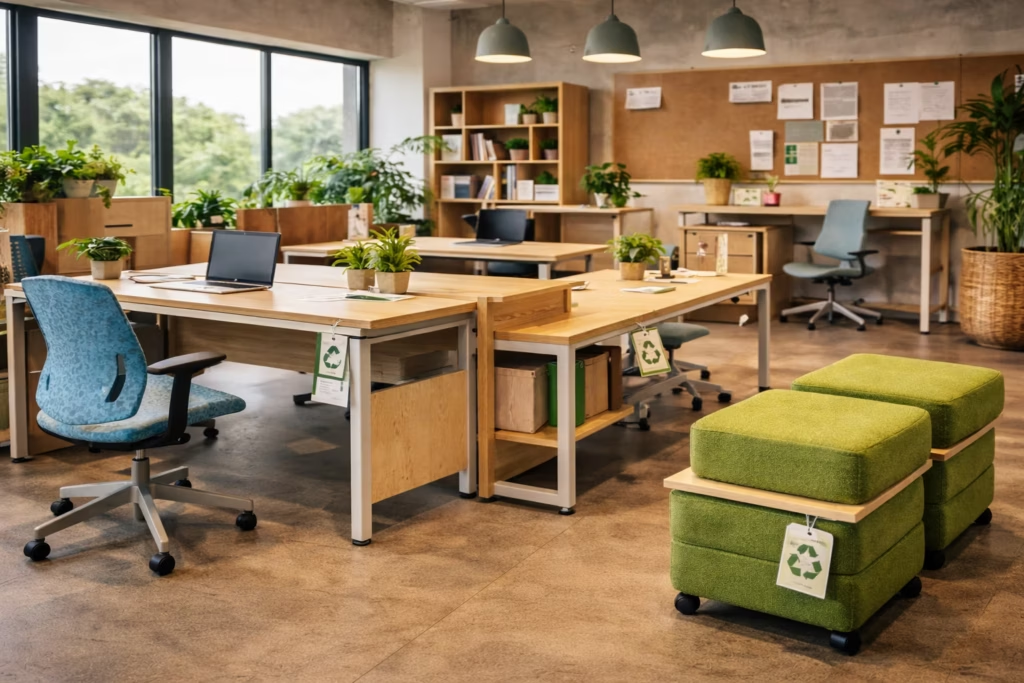
Sustainable and renewable designer furniture as the new standard
Third trend: sustainability is no longer a “side issue”. It is becoming a basic criterion in development projects.
According to the Circularity Gap Report 2023, the global economy is only 7.2% circular: more than 90% of extracted materials still end up wasted or not reused.
In Europe, the furniture sector accounts for around 25% of global production and is gradually shifting towards more circular models: design for reuse, recyclability, repairability, reuse of components, etc.
How this changes office design
Companies already anticipating 2026:
- choose durable, repairable, modular furniture rather than ‘disposable project’ furniture;
- are interested in the origin of materials (recycled content, certifications, VOC emissions, etc.);
- incorporate reuse or reconditioning into their development strategy where appropriate.
The Wooh vision: invest better, invest longer
At Wooh, we favour furniture solutions:
- designed for a long service life in a professional environment,
- adjustable and adaptable to keep pace with the development of your teams,
- accompanied by advice that prevents impulsive purchases that are inconsistent with your usage.
Our role is not just to sell you chairs and desks, but to help you make the right choices from the outset, to limit premature replacements and cubic metres of unused furniture in stock or in the skip.