This guide is designed for HR managers, office managers and directors of Belgian SMEs who want to understand the objective criteria of a professional ergonomic chair before moving to purchase. Mechanisms, adjustments, brands available at Wooh: here is what you need to know. To go straight to the catalogue, browse our selection of professional ergonomic chairs.
What is a real ergonomic chair?
The term “ergonomic” has become a marketing argument applied to products that do not always deserve the label. Technically, an ergonomic chair is a seat designed to adapt to the user’s body shape and movements during a prolonged work session of 6 to 8 hours a day.
What sets an ergonomic chair apart from a standard one is the combination of three elements: multiple independent adjustments (seat height, seat depth, adjustable lumbar support, 4D armrests), a dynamic mechanism that follows the body’s movements, and a design focused on maintaining a neutral posture throughout the day. The European standard EN 1335 defines the minimum requirements for professional office chairs. Compliance with this standard is an objective purchasing criterion, not an option.
Ergonomic chair or standard chair: what really changes
A standard office chair costing 150 to 200 euros rarely offers more than seat-height adjustment and a fixed reclining backrest. At a workstation used 2 to 3 hours a day, the impact is limited. At an intensively used workstation, the consequences are well documented: lower-back pain, neck pain, musculoskeletal disorders, sick leave.
Musculoskeletal disorders account for about 80% of recognised occupational diseases in Belgium. Investing in a properly adjusted ergonomic chair is a preventive measure that also engages the employer’s responsibility for wellbeing at work. Calculated as an annual cost over an 8 to 10 year lifespan, a 600 euro ergonomic chair works out cheaper than a 200 euro standard chair replaced every 2 to 3 years at an intensively used workstation.
The ergonomic chair brands available at Wooh
Wooh offers ergonomic chairs from professional brands, all distributed and available to test in the Nivelles showroom before any purchase.
- Narbutas : Lithuanian brand known for its value for money in the professional segment. Wide range from task to executive chairs.
- Interstuhl : German benchmark in the high-end ergonomics market. The EVERY 211 is one of the most certified chairs on the market, with more than 100 tests and certifications.
- Wilkhahn : German design combined with advanced ergonomics. The ON is particularly recommended for very intensively used workstations.
- Frezza : Italian brand combining design and ergonomic functionality. The TAKK range offers an excellent aesthetics-to-ergonomics ratio for open spaces.
- Sitis : Mid-range positioning with good coverage of the essential adjustments, suited to volume equipment.
-
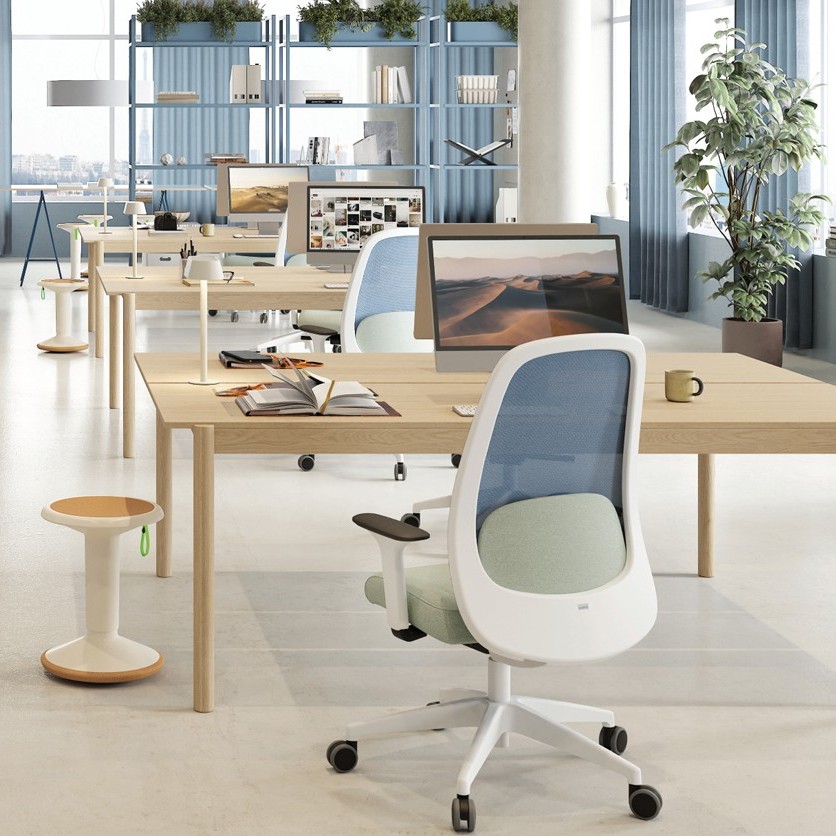
Ergonomic seat | HEJ HJ216
From 530,00 € HTVA -
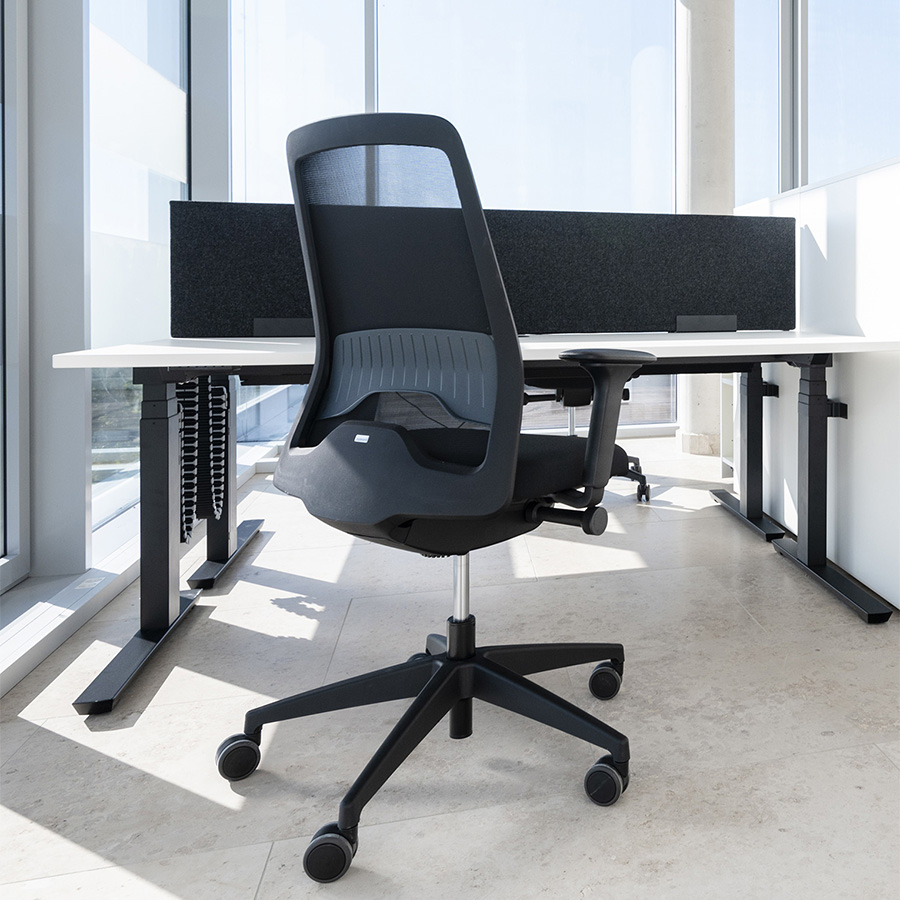
Ergonomic seat | EVERY211
From 489,00 € HTVA -
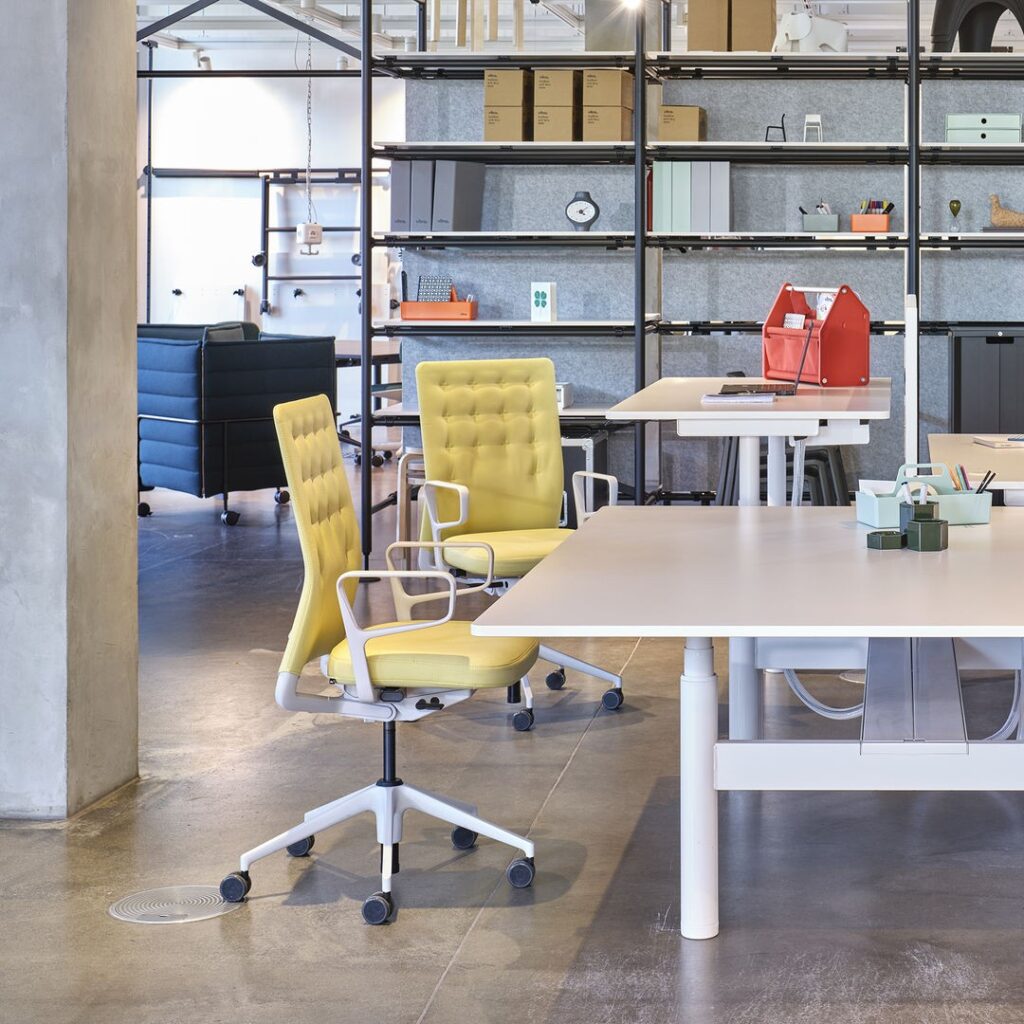
Ergonomic seat | ID TRIM
From 785,13 € HTVA
Frequently asked questions about ergonomic office chairs
What is the difference between a synchronised mechanism and a permanent-contact mechanism?
The synchronised mechanism couples the backrest and the seat in a fixed ratio (usually 2:1): when the backrest reclines, the seat tilts slightly. The permanent-contact mechanism goes further: it continuously adapts the backrest resistance to the user’s weight, with no tension to set manually. It is the recommended standard for intensively used workstations.
From what budget should you buy a professional ergonomic chair?
For an intensively used workstation, the threshold for real quality is around 400 to 500 euros. Below that, compromises on mechanisms and materials affect durability and the actual level of ergonomics. For volume purchases, Wooh offers pricing terms suited to SME orders.
How do you correctly adjust an ergonomic chair?
In order: (1) seat height so that the feet are flat on the floor and the knees at 90°, (2) seat depth so that the back of the knee is not compressed, (3) lumbar support positioned in the hollow of the lower back, (4) armrests at elbow height with arms relaxed, (5) backrest tension according to weight. Our showroom team assists with this adjustment for every purchase.
Is an ergonomic chair tax-deductible for a Belgian SME?
In Belgium, professional office furniture is 100% deductible as a business expense for companies, provided it is used exclusively for professional purposes. Consult your accountant for the terms specific to your situation.
Can you test the ergonomic chairs before buying at Wooh?
Yes, that is precisely the value of our 1,500 m² showroom in Nivelles. All ergonomic models are on display and can be tested in real conditions, with guidance from an advisor. We recommend this step for any volume purchase. Visits by appointment.
Laboratory chairs
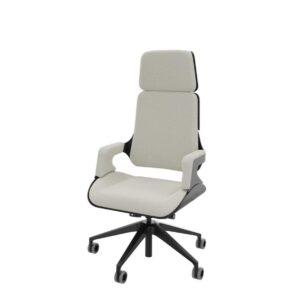
Executive chairs
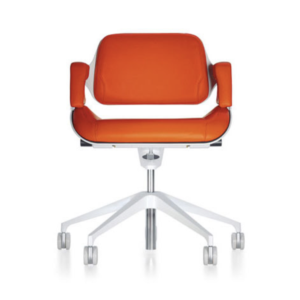
Meeting chairs
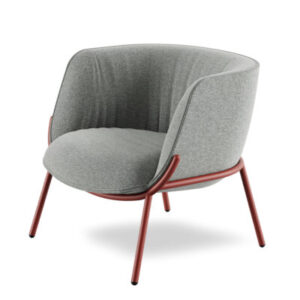
Waiting-room chairs
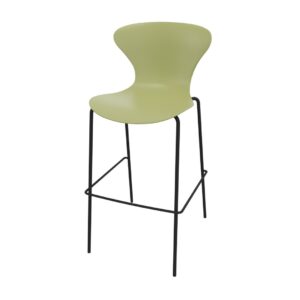
Stools and high chairs
Office poufs
Back to the full guide: Professional office chairs