Laboratory chairs: how to choose a model suited to your work environment?

In a laboratory, a technical workshop or an industrial environment, the chair is an integral part of the workstation. It must make it possible to carry out precise tasks while guaranteeing comfort, stability and freedom of movement. Choosing a suitable laboratory chair helps improve working conditions while meeting the specific constraints of these demanding environments.

Laboratory chairs meet very different needs from a classic office chair. Specific adjustments, easy-to-maintain materials, resistance to intensive use or compatibility with certain technical environments: several criteria must be taken into account before making a choice. On this page, Wooh helps you identify the essential elements for selecting a chair suited to your activities and to the constraints of your workstation.

What are the specific features of a laboratory chair?

Laboratory chairs differ from classic office chairs through their design specifically conceived for technical and professional environments. Where an office chair mainly prioritises administrative comfort, a laboratory chair or stool must meet additional requirements in terms of resistance, hygiene, mobility and precision of adjustments.

These chairs are generally equipped with a seat and a backrest designed to withstand intensive use in sometimes demanding contexts. They also incorporate materials that are easy to clean, wear-resistant and suited to environments where cleanliness and durability are essential.

The seat height, the footrest, the castors or the various adjustment mechanisms make it possible to adapt the chair to technical workstations, laboratory benches or raised work surfaces. This adaptability contributes directly to user comfort and to the quality of their working conditions.

Why use a chair suited to technical environments?

In a laboratory, a workshop or a production environment, the constraints are often different from those found in a traditional office. Workstations may be higher, movements more frequent and the requirements for hygiene or resistance greater. Using a chair specifically designed for these conditions makes it possible to work in an environment better suited to the tasks carried out day to day.

A laboratory chair also offers more flexibility thanks to its many adjustments and its ability to adapt to different types of workstations. This adaptability allows users to maintain a comfortable posture throughout the day, even when alternating between different activities or work areas.

Finally, technical chairs are designed to withstand intensive use and sometimes demanding environments. Their materials, their mechanisms and their design meet specific needs that often go beyond those of a classic office chair, thus guaranteeing better durability over time.

The essential features of a good laboratory chair

Not all laboratory chairs meet the same needs. Depending on the work environment, the frequency of use and the technical constraints encountered day to day, certain features may prove essential. Before making your choice, it is therefore important to assess the elements that will have a direct impact on the comfort, safety and durability of the chair.

Adjustments

Laboratory chairs must be able to adapt to varied users and workstations. Seat-height adjustment is generally essential, especially when work surfaces are higher than in a classic office. Some models also offer additional adjustments of the backrest or the seat to improve comfort and posture day to day.

The footrest

When workstations are higher than usual, a footrest becomes essential to guarantee a comfortable, stable position. Many laboratory chairs are equipped with an adjustable footrest ring that supports the legs and improves posture when the user works at a bench or a raised work surface. This feature helps reduce fatigue and preserve comfort during prolonged use.

Mobility

In many laboratories or workshops, users need to move around their workstation regularly. Chairs equipped with castors make these movements easier and improve efficiency. Depending on needs, some models can also be equipped with glides to favour stability. Laboratory stools are also particularly appreciated in environments requiring frequent movement and great freedom of movement.

Maintenance

In some environments, cleanliness is an essential criterion. Laboratory chairs are often designed with easy-to-clean surfaces and materials that limit the accumulation of dust or residue. This feature is particularly important in laboratories, medical environments or cleanrooms.

Materials

The choice of materials plays an important role in the durability and maintenance of the chair. Polyurethane upholstery is particularly appreciated in technical environments for its resistance and ease of cleaning. Other materials may be preferred when seating comfort or aesthetics are more sought after.

Durability

Technical chairs are subject to significant stress on a daily basis. Their structure must be able to withstand intensive use while maintaining its performance over time. The quality of the materials, the mechanisms and the manufacturing is therefore a decisive criterion for guaranteeing a durable investment.

By analysing these different criteria, you can identify the laboratory chair best suited to your work environment and to the requirements of your activity. A well-chosen model contributes not only to user comfort, but also to the efficiency and durability of the workstation.

The professions concerned

In which professions are laboratory chairs used?

Laboratory chairs are used in many sectors where users work at technical stations, carry out precise manipulations or operate in environments subject to particular constraints. Thanks to their specific adjustments, their sturdiness and their ease of maintenance, they meet far broader needs than those of scientific laboratories alone.

Laboratories and research centres

Laboratory technicians, researchers and analysts often spend several hours carrying out precise manipulations or working at benches. Laboratory chairs offer them the stability, comfort and adjustments needed to perform these tasks in good conditions.

Medical laboratories and the healthcare sector

Analysis laboratories, dental practices, ophthalmology practices, veterinary practices and medical centres regularly use technical chairs suited to the hygiene and cleaning requirements specific to their activity. Resistant, easy-to-maintain materials are an essential criterion here.

Industry and quality control

In many industrial environments, operators carry out control, assembly or inspection operations requiring precision and mobility. Laboratory chairs help improve working comfort while adapting to workstations that are sometimes raised or subject to intensive use.

Technical workshops and precision trades

Professionals in electronics, precision mechanics or assembly activities often use technical chairs to benefit from a stable, adjustable seat. These environments generally require great freedom of movement and precise adaptation to the workstation.

Cleanrooms and controlled environments

In the pharmaceutical, technological or industrial sectors subject to strict cleanliness standards, some laboratory chairs are specifically designed to limit the accumulation of particles and facilitate cleaning. They thus contribute to meeting the requirements specific to these sensitive environments.

Whether it is a laboratory, a technical workshop or an industrial environment, the choice of chair must always be suited to the constraints of the workstation. A model designed for these specific uses helps improve user comfort while meeting the requirements specific to each profession.

Choose wisely

Which laboratory chair to choose according to your work environment?

Not all technical environments impose the same constraints. Some prioritise hygiene, others mobility or working at raised surfaces. Identifying the specific features of your workstation helps select a chair truly suited to your daily activity. In some cases, a technical stool will even be more suitable. Without a real backrest, it then offers more dynamism but less comfort than a chair. Some users will prefer a laboratory chair for better support, while others will opt for a laboratory stool offering more mobility around their workstation.

For an analysis or research laboratory

In a laboratory, users often alternate between different manipulations and equipment. An adjustable, mobile and easy-to-clean chair is generally the best choice to accompany these frequent movements while maintaining a good level of comfort.

For a medical or dental practice

Medical environments require resistant materials that are easy to disinfect. Chairs equipped with suitable upholstery and castors make it easier to move around the patient while meeting the hygiene requirements specific to these activities.

For a workshop or an industrial environment

In technical workshops or production areas, sturdiness becomes a priority criterion. The chairs must withstand intensive use while offering sufficient stability to carry out control, assembly or inspection operations.

For a raised workstation

When work is carried out at a bench or a high work surface, it is recommended to opt for a chair equipped with a suitable gas lift and a footrest ring. This configuration makes it possible to maintain a comfortable posture while facilitating access to the work area.

The best laboratory chair is above all the one that meets the constraints of your work environment. By taking into account your activity, your hygiene requirements and the configuration of your workstation, you can select a model offering the right balance between comfort, mobility and durability.

Recognised brands

The professional laboratory chairs selected by our experts

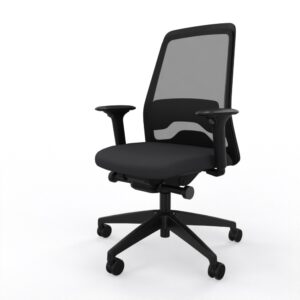
The laboratory chairs offered by Wooh come from the brand Interstuhl, a manufacturer recognised for its expertise in professional and technical seating. Designed to meet the demands of laboratories, workshops and specialised environments, they combine sturdiness, ergonomics and durability to support users day to day.

Our selection of laboratory chairs
Frequently asked questions about laboratory chairs

What is the difference between a laboratory chair and a classic office chair?

A laboratory chair is designed to meet the constraints of technical and professional environments. It stands out with more resistant materials, adjustments suited to raised workstations, better ease of maintenance and a design conceived for intensive use in specific conditions.

Is a laboratory chair suitable for a medical or dental practice?

Yes. Laboratory chairs are frequently used in medical, dental or paramedical practices for their easy-to-clean surfaces, their mobility and their precise adjustments. They allow practitioners to work comfortably while respecting the hygiene requirements specific to these environments.

What is a footrest on a laboratory chair for?

The footrest, often present as an adjustable ring, makes it possible to maintain a comfortable posture when the workstation is located at height. It offers better support for the legs and helps reduce fatigue during prolonged use at a bench or a raised work surface.

Which materials should you favour for a laboratory chair?

Polyurethane upholstery is particularly appreciated for its resistance, durability and ease of cleaning. The choice of material depends, however, on the work environment, the level of hygiene required and the comfort sought.

Can you use a laboratory chair in a workshop or an industrial environment?

Yes. Many laboratory chairs are also suited to technical workshops, quality-control stations or industrial environments. Their sturdiness, their mobility and their adjustment options make them versatile solutions for many technical trades.

How do you choose the right height for a laboratory chair?

The height of the chair must be suited to that of the workstation. For benches or raised work surfaces, it is recommended to choose a model equipped with a suitable gas lift and, if necessary, a footrest to guarantee a comfortable, ergonomic position throughout the day.
Shopping Cart
Scroll to Top