The meeting chairs to favour depend above all on how your rooms are used day to day. Quick meetings, collaborative workshops, conferences or longer sessions: each setup places different demands in terms of comfort, flexibility and durability. On this page, Wooh helps you identify the essential elements for selecting chairs suited to your professional environment. You can also browse our selection of meeting chair models directly to compare the available solutions.
How can you tell a good meeting chair?
A meeting chair is a seat designed to equip meeting, collaboration or training spaces in a company. Unlike a classic ergonomic office chair, it is generally designed for occasional or semi-intensive use, with a balance between comfort, light weight and easy movement.
It stands out with a simpler design, often without complex mechanisms, while offering a level of comfort sufficient for meetings of varying length. Some meeting chairs nevertheless include ergonomic features, such as a well-designed backrest or a suitable seat, to improve support during longer discussions.
Used in meeting rooms, conference rooms, multi-purpose spaces or collaborative offices, the meeting chair must meet specific requirements: easy storage, modularity and consistency with the overall layout of the professional space.
Why does a suitable meeting chair matter?
The choice of meeting chairs has a direct impact on the quality of discussions and the comfort of participants. An unsuitable seat can quickly become uncomfortable, especially during meetings that stretch over several hours. This then harms the concentration and engagement of employees.
Beyond comfort, meeting chairs also contribute to your company’s image. A well-equipped room, with consistent, high-quality seats, strengthens credibility with clients, visitors, partners and internal teams. It is an often underestimated but essential element in the overall perception of your professional spaces.
Finally, choosing suitable chairs helps meet your organisation’s specific constraints: office flexibility, frequency of use, ease of storage or modularity. A good choice therefore guarantees comfort, functionality and durability over time.
Vitra.
Vitra is a benchmark in design and high-end office furniture. The brand stands out with meeting chairs that are both attractive and functional, designed in collaboration with renowned designers. Vitra models fit perfectly into professional spaces where image and the quality of finishes are essential.
Interstuhl
Interstuhl designs meeting chairs that offer a good level of comfort, even during prolonged use, with particular attention to durability and the quality of the mechanisms. It is a brand particularly suited to demanding work environments.
Infiniti
Infiniti offers meeting chairs with a contemporary design and strong attention to materials. The brand focuses on solutions that are both attractive and functional, ideal for modern collaborative spaces or meeting rooms with a strong visual identity.
Wilkhahn
Wilkhahn is a German brand known for its innovative approach to ergonomics and movement. Its meeting chairs include mechanisms that encourage a dynamic posture, particularly suited to long meetings or environments where active comfort is sought.
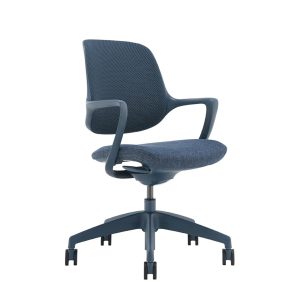
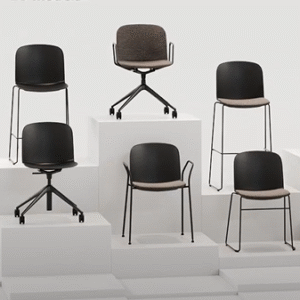
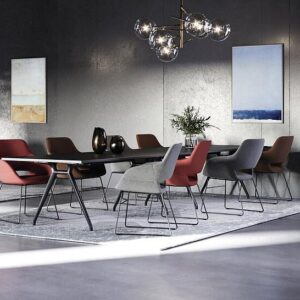
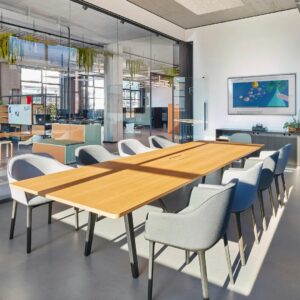
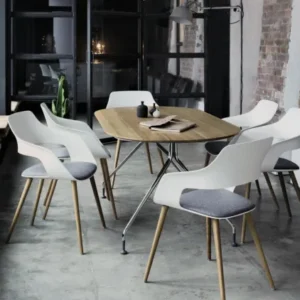
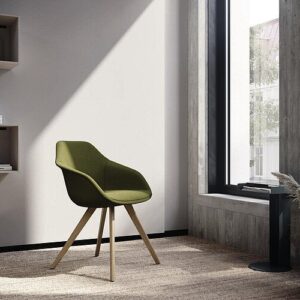
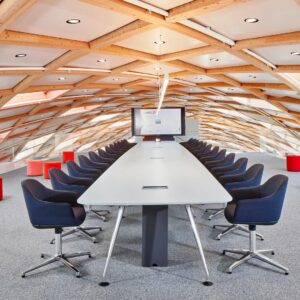
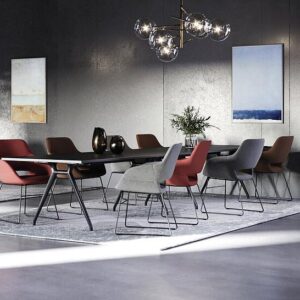
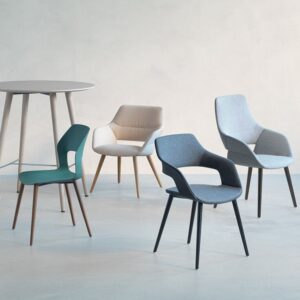
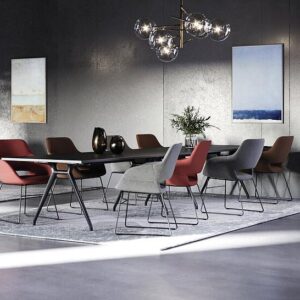
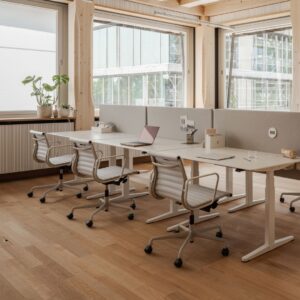
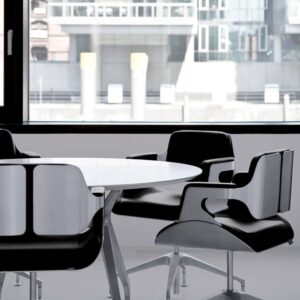
Wooh’s selection of meeting chairs
Meeting chairs FAQ
What is the difference between a meeting chair and a classic office chair?
A meeting chair is designed for occasional or semi-intensive use, with a simpler structure and often without adjustments. An office chair, on the other hand, is designed for prolonged use and generally includes more ergonomic features.
Which meeting chairs should you choose for long meetings?
For long meetings, it is recommended to opt for a chair with a comfortable seat, a well-designed backrest and, if possible, light padding. These elements help limit fatigue and improve participants’ comfort over time.
Is it worth choosing stackable meeting chairs?
Yes, it all depends on the use. Stackable chairs are particularly suited to multi-purpose spaces or modular rooms. They save space and make it easy to reorganise the space as needed.
Which material should you favour for a meeting chair?
Here too, the choice depends on the use. Fabric offers better comfort, especially for long meetings, while plastic or metal are often preferred for their ease of maintenance, durability and light weight.
Can meeting chairs be ergonomic?
Some meeting chairs include ergonomic elements, such as a well-designed backrest or a suitable seat. However, for very intensive use, professional ergonomic seats remain more complete in terms of adjustments and support.
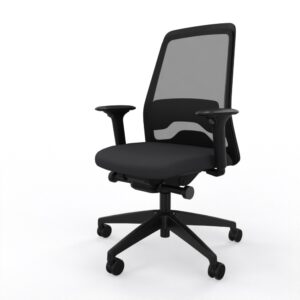
Ergonomic chairs
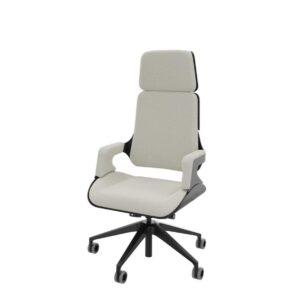
Executive chairs
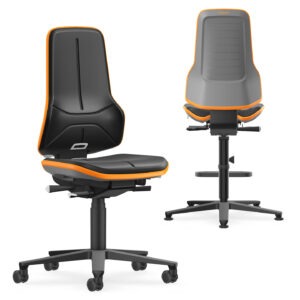
Laboratory chairs
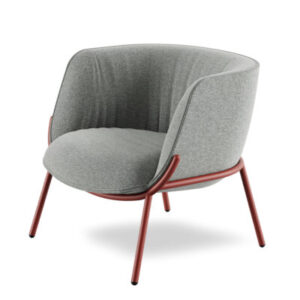
Waiting-room chairs
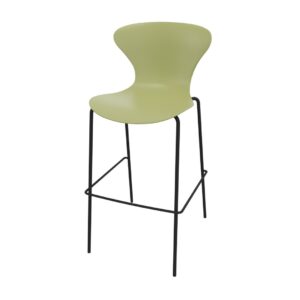
Stools and high chairs
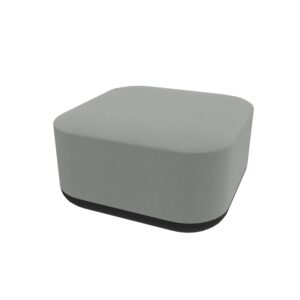
Office poufs
Back to the full guide: Professional office chairs